APHASIA CENTER OF ACADIANA

  • Home
  • I have aphasia
    • What is Aphasia?
    • Who Are We?
    • Join our Groups
    • Mental and Physical Health
    • Resources
  • Care Partners
    • What is aphasia?
    • How can I help?
    • Support Groups
    • About Us
  • Research & News
    • Research
    • Scheduled Events
    • News
    • Annual Fundraiser Dinner
  • SHOP
  • Ways to Give
    • Donate
    • Volunteer
    • Sponsor
  • Contact Us
  • Home
  • I have aphasia
    • What is Aphasia?
    • Who Are We?
    • Join our Groups
    • Mental and Physical Health
    • Resources
  • Care Partners
    • What is aphasia?
    • How can I help?
    • Support Groups
    • About Us
  • Research & News
    • Research
    • Scheduled Events
    • News
    • Annual Fundraiser Dinner
  • SHOP
  • Ways to Give
    • Donate
    • Volunteer
    • Sponsor
  • Contact Us

What is aphasia?

Definition of aphasia

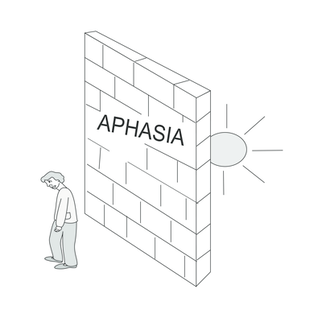
  • The National Institute of Health defines aphasia as “a neurological disorder caused by damage to the portions of the brain that are responsible for language production or processing.”
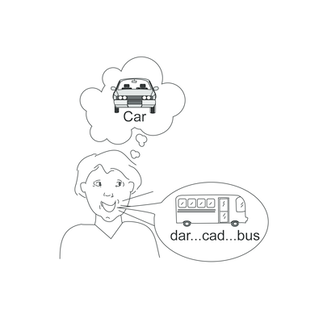
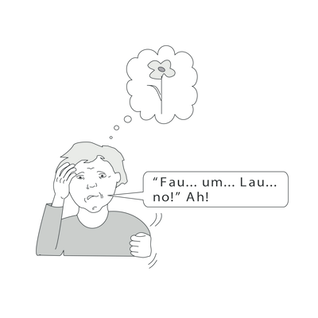
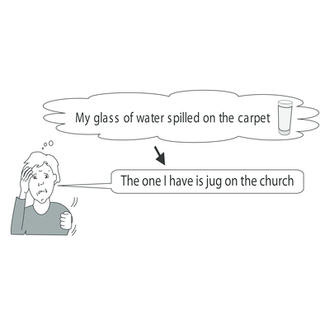
  • ​This means there is a language disruption that can affect all forms of communication - speaking, writing, understanding, and reading.
  • ​Some people have more trouble speaking, but understanding is just fine. Some people have trouble with all modes of communication. The point is that everyone's aphasia looks different. 
  • Aphasia usually comes from a stroke or brain injury.
    • Sometimes the injury involves blood being kept from certain parts of the brain (ischemic stroke). Those brain cells don't receive enough oxygen and die.
    • Sometimes the injury involves blood going where it's not supposed to in the brain (hemorrhagic stroke). This increases the pressure in the brain and harms blood vessels.
    • Aphasia can also come from repeated TIAs (mini-strokes), seizures, or brain cancer.
    • Sometimes aphasia doesn't come from a brain injury, though. See below for a definition of primary progressive aphasia.
  • The severity of aphasia depends a lot on how much brain damage occurred and where it occurred. That's why aphasia looks so different for so many people. ​
  • Aphasia has a large potential to impact social connection, since language is the foundation of relationship. Even people with "mild" aphasia report feeling lonely and isolated due to their language disorder. 
  • If your loved one has aphasia, use this link to connect with speech therapists and mental health counselors who can help.
mental and physical health

Definition of primary progressive aphasia (PPA)

  • Primary progressive aphasia (PPA) differs from aphasia resulting from a stroke or brain injury. It's actually a form of progressive fronto-temporal dementia that begins with aphasia-like symptoms and progresses into more significant difficulties with speaking and understanding. 
  • This differs from stroke-related aphasia in that PPA is neurodegenerative and gets worse over time. Stroke-related aphasia will stay relatively constant or improve (without additional brain injury, that is).
  • PPA occurs when the language parts of the brain begin to atrophy, or shrink. There is no identified reason why this occurs, but it's thought to have a genetic component.
  • Some people with PPA will eventually develop dementia, which involves more cognitive symptoms than language symptoms. See below for the difference between dementia and aphasia.
  • So far, there is no cure for PPA. New experimental treatments are being trialed every day. 
  • People with PPA may experience different struggles than people with stroke-related aphasia. Their language problems may look the same on the surface, but therapy will include more compensations for long-term support due to the progressive nature of the diagnosis.
    • ​For example, some people with PPA may participate in "voice banking," or recording their own voice early in their PPA journey so they can use it on assistive technology as their disease progresses.
  • PPA can also lead to different mental health challenges related to prognosis and future communication struggles. 
  • If your loved one has PPA, use this link to connect with speech therapists and mental health counselors who can help.
mental and physical health

Common myths about aphasia

MYTH: "All aphasia goes away after a few months."
  • Some does, but some doesn't. Aphasia is often a chronic condition, meaning that it never fully goes away.
MYTH: "People with aphasia cannot improve after a certain amount of time."
  • This is absolutely false. People with aphasia can improve years after onset with therapy and support. We see it every day.
  • Insurance companies use this myth to deny services to people with aphasia after a certain amount of time. That's why our work is so important - we provide services for those who would otherwise go without.
MYTH: "My loved one with aphasia could talk if they worked harder."
  • Aphasia means that someone has lost access to the language system in their brain. No amount of "trying harder" is going to help them access that system again. 
  • The thing that will help is consistent therapy and learning strategies to work around the aphasia. That is where the work comes in! But telling someone with aphasia just to try harder is not going to help at all.
  • Here are some things that can help someone with aphasia in conversation:
    • Giving a lot of pause time. It's okay for it to be silent!
    • Offering pen and paper so they can write or draw.
    • ​Writing down important "keywords" during conversation so it's easier to follow.
    • Learning their cues for when to help. For example, people with aphasia may make eye contact when they're ready for someone to jump in and support in conversation. 
    • Offering "this or that" choices when they do want you to help (e.g., "are you talking about an animal or a person?").
  • For more ways to support your person with aphasia, go to our tab "How Can I Help?" 
How can i help?
MYTH: "Aphasia only comes from strokes. If you didn't have a stroke, you don't have aphasia."
  • Aphasia often comes from strokes, but can also come from traumatic brain injuries like car accidents, gunshot wounds, and more. It can also result from brain cancer and aneurysms. 
  • In the case of PPA, there is no brain injury - it's a neurodegenerative condition. See above for more PPA information.
MYTH: "My loved one has aphasia and now they can't think for themselves at all. It's like they're a child again."
  • This is a very common misconception. Aphasia does NOT affect intelligence.
  • Your loved one with aphasia is the same intelligent person they've always been. They just can't access the language to share that intelligence with you anymore. 
  • A lot of people get aphasia confused with dementia. Let's define two terms to make that simpler: auditory comprehension and cognition.
    • Auditory comprehension means that spoken words are not processed correctly as they move into the brain. This is what happens with aphasia. Spoken language sounds like gibberish to a person with aphasia - it's complete nonsense. This is an issue with processing, not cognition.
    • Cognition is our ability to think, reason, and use logic. Cognition is mediated by language, so sometimes people with aphasia have minor trouble with cognitive tasks. However, cognition is largely intact for people with aphasia. It's just hard to access those cognitive skills because of the language problems.
      • Fun fact: this is often how medical professionals tell the difference between someone with aphasia and someone with dementia.
      • If you show a picture of a person about to fall off a ladder to someone with aphasia, they will immediately point to the danger and indicate that something bad is about to happen. They've used logic to see the cause and effect of this situation.
      • If you show that same picture to someone with dementia, they likely will not identify the dangerous cause and effect of falling off the ladder. They might instead comment on the person's clothing or their surroundings. Their ability to reason out the danger is affected by their dementia diagnosis.
  • Auditory comprehension and verbal expression are affected by aphasia. Intelligence is not. 
  • You may need to explain things a little slower or use some strategies. Their intelligence is intact - it just takes a bit longer to get there sometimes!
MYTH: "I should just speak for my loved one with aphasia all the time. They won't be able to get the words out anyway."
  • Some people with aphasia might appreciate you helping them in conversation from time to time. But in our experience, a lot of people with aphasia want to be able to share their own thoughts - even if it takes a little longer.
  • ​Don't assume that your person with aphasia always wants you to jump in when they're struggling. Learn their cues and talk about how best to help when they get stuck.
  • Your speech therapist or counselor is a great person to help with this, too. Don't be afraid to bring up things like this in therapy.
  • ​For more ways to support your person with aphasia, click our tab "How Can I Help?" ​
How can i help?
MYTH: "My loved one will never get back to their life before aphasia. They can never enjoy life again and neither can I."
  • It can absolutely seem like this is true, especially right after an aphasia diagnosis. But we promise you there is light at the end of the tunnel.
  • Our main goal at the Aphasia Center is to get people with aphasia back to doing what they love. We've helped people get back to work, go fishing, give speeches, read bedtime stories to their kids, eat crawfish, and more. 
  • We're also here to help you, the care partner. We know that you experience highs and lows just like your loved one. You are not alone in your journey. 
  • Things are always different after aphasia. But they don't have to be terrible. Join our community and let us support you!
Start the process here

Other informational resources

Important Links

Home
I Have Aphasia
Mental & Physical Health
Resources
Donate
​Contact Us

Address & Contact

Mailing Address:
P.O. Box 43170, Lafayette, LA 70504

Email:
[email protected]

Phone: 
​337-482-6577

    Get our Newsletter

Subscribe to Newsletter