Research in aphasia
that people with aphasia care about!

|
Vice President of research
|
|
|
|
|
What are we up to?
|
In the Aphasia Center of Acadiana, we produce research that is focused on the wants and needs of people with aphasia. Here are a few of our current projects:
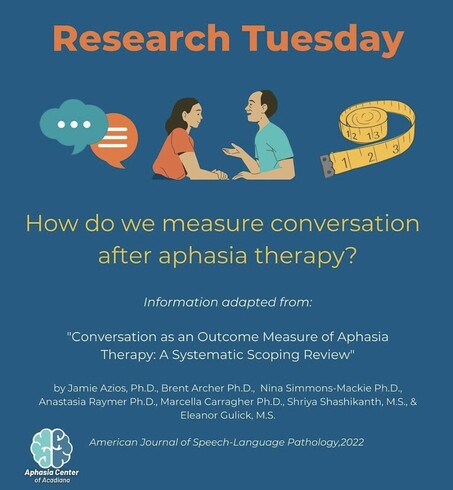
-Maintaining friendships after stroke -Improving texting for people with aphasia and their partners -Promoting access to mental health services -Enhancing conversation for people with aphasia -Recognizing & learning about the experiences of black people with aphasia and their healthcare encounters to further improve the healthcare system. |
The research lab at the Aphasia Center of Acadiana is directed by Dr. Jamie Azios. We have monthly lab meetings with undergraduate students, graduate clinicians, and PhD students to focus on these research projects and others that help to improve the lives of people with aphasia. Interested in signing up as a research participant, volunteering as a student, or getting your PhD? Contact [email protected] for more info! |
Research Team making texting easier!
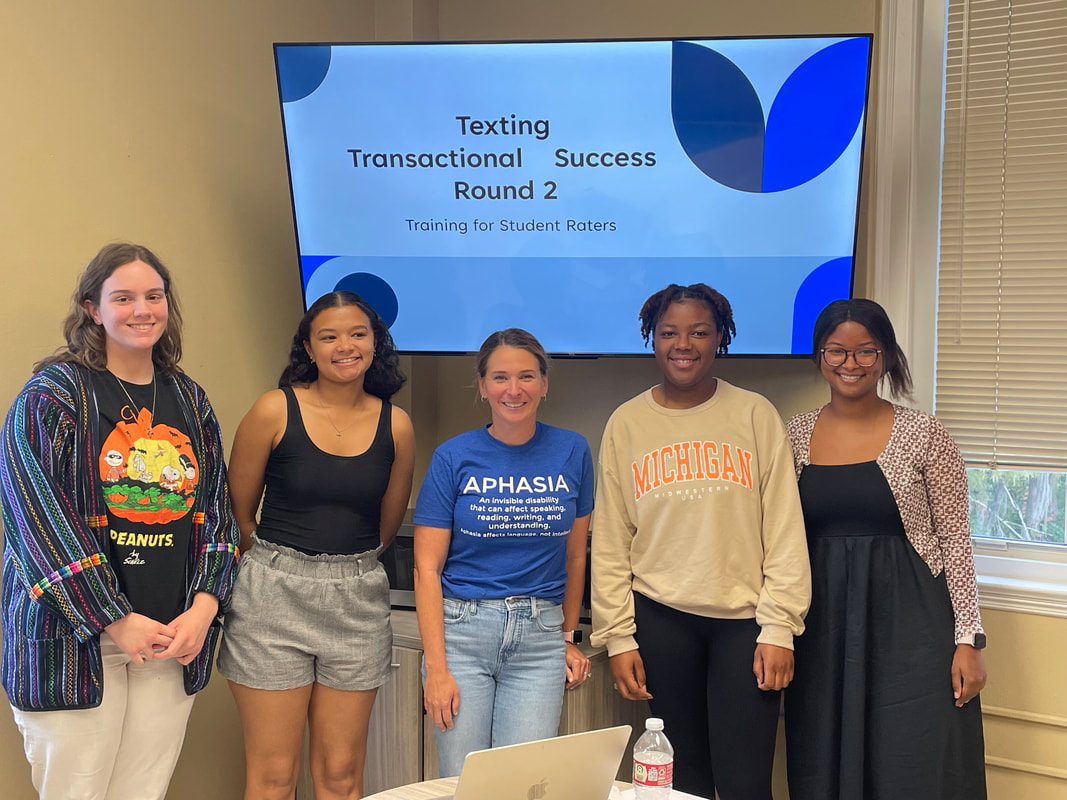
Congratulations to our research assistants here at UL Lafayette and our colleagues at James Madison University.
They have been working hard over the last few weeks learning how to code text messages written by people with aphasia.
The statistics are in! They passed the training and now they will be scoring the sample for the actual study.
The study will determine if the scale developed to test texting success in aphasia is ready to be used in clinical practice!
This will help clinicians have a tool to measure change if they want to help people with aphasia improve texting.
They have been working hard over the last few weeks learning how to code text messages written by people with aphasia.
The statistics are in! They passed the training and now they will be scoring the sample for the actual study.
The study will determine if the scale developed to test texting success in aphasia is ready to be used in clinical practice!
This will help clinicians have a tool to measure change if they want to help people with aphasia improve texting.
Other Research Study Opportunities
